| Years | Role | Scope |
| 2024 - Present | Founder | Product Strategy, Product Design, Full Stack Development, Prototyping, AI Integration |
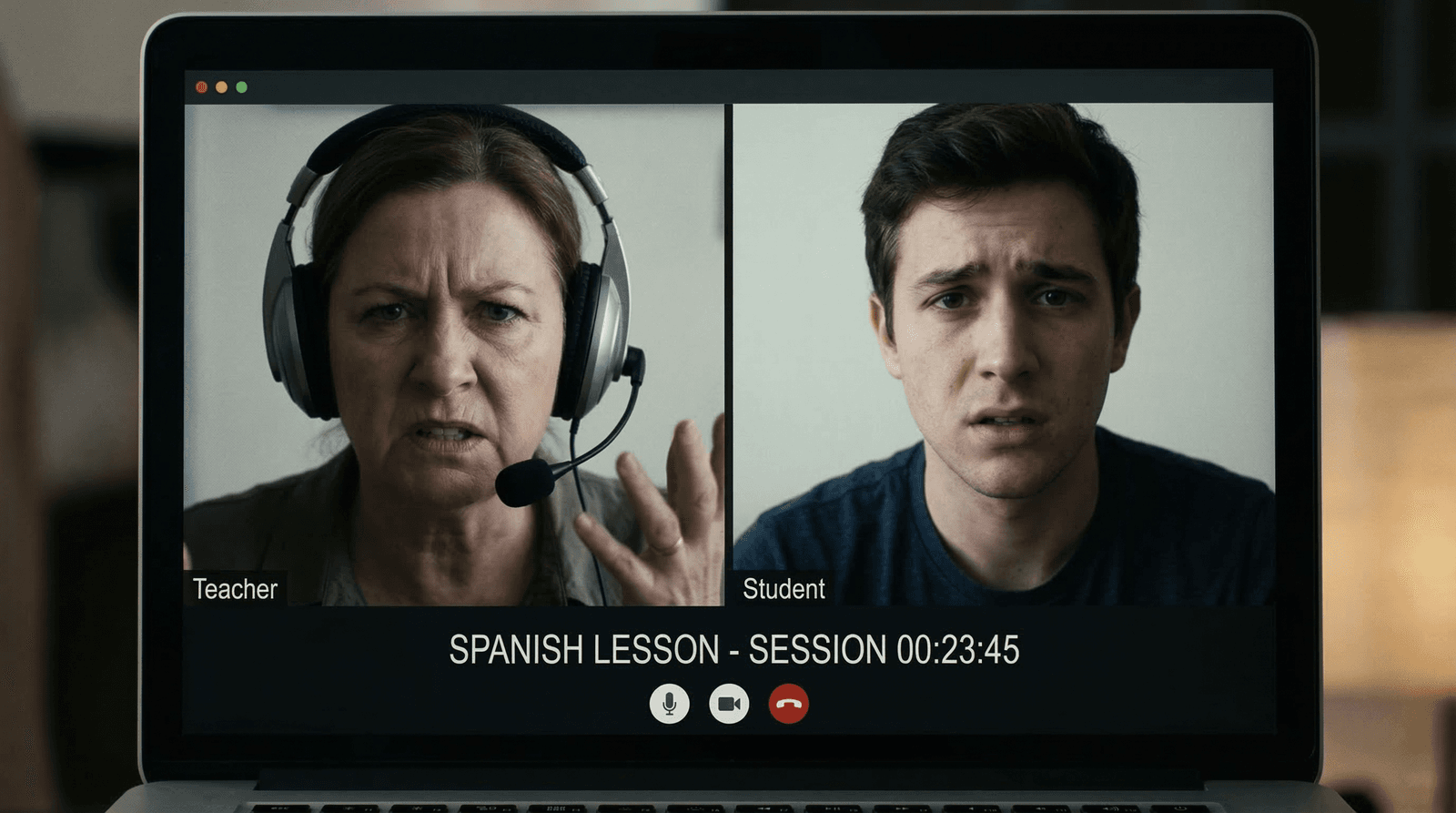
Non-native English speakers lack accessible, judgment-free environments to practice real conversation. Existing tools drill grammar and vocabulary but never build the confidence to actually speak.
The real gap for language learners isn't grammar or vocabulary. It's the fear of speaking. So instead of building another study app, I made a speaking-first one: practice out loud from day one, about real and current topics, in a space where there's no one to judge you. Every design and engineering decision below follows from that single bet.
It started with a real problem, not a feature
This started as my own problem. I knew the words but froze the moment I had to speak, and the apps already out there were chasing different goals. Before writing a line of code, I went to talk to potential users across every channel I could reach, running everything from Mom Test interviews to casual conversations to find who this was really for. Market research backed up the gut feeling, and the strategy became clear: lead with speaking and be unmistakably different from everyone else.

Onboarding that sets you up to speak
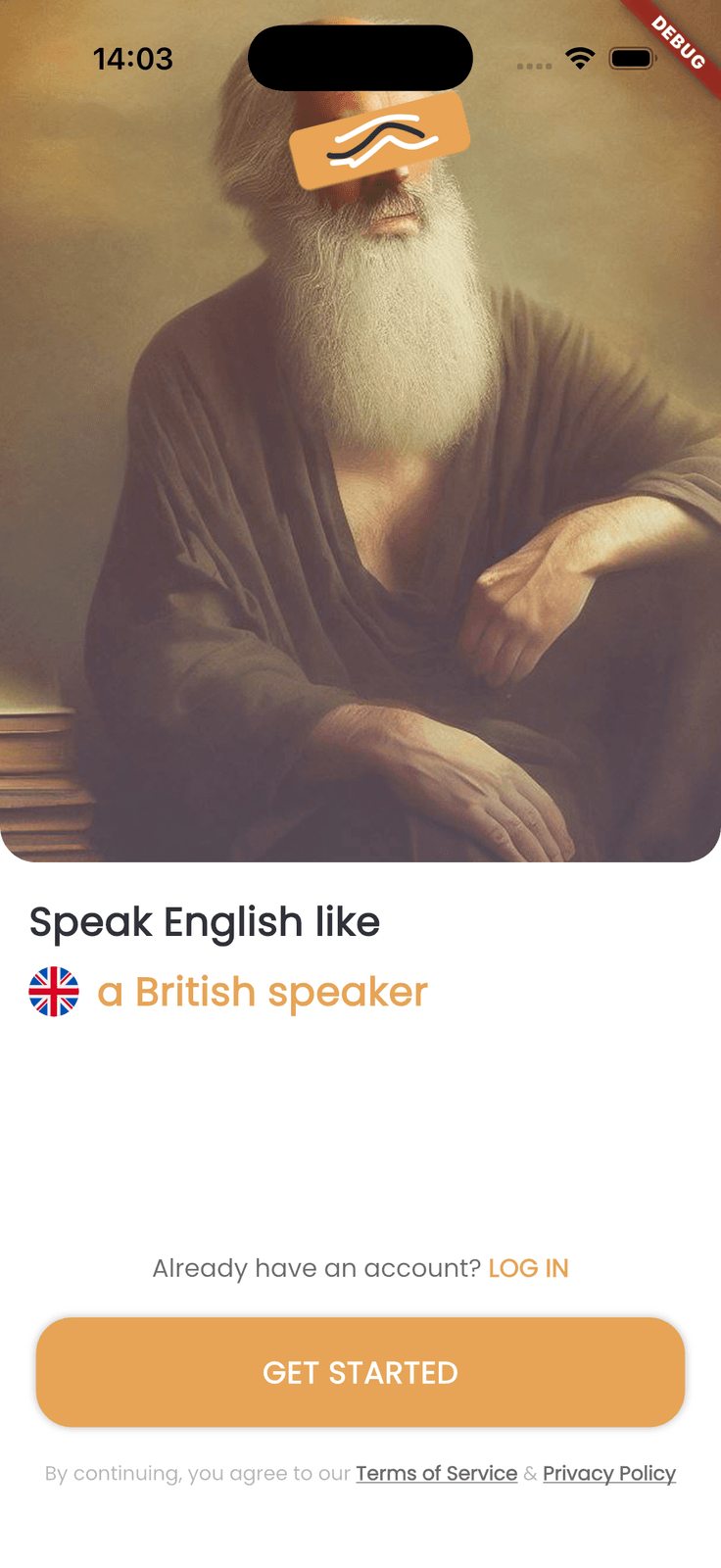
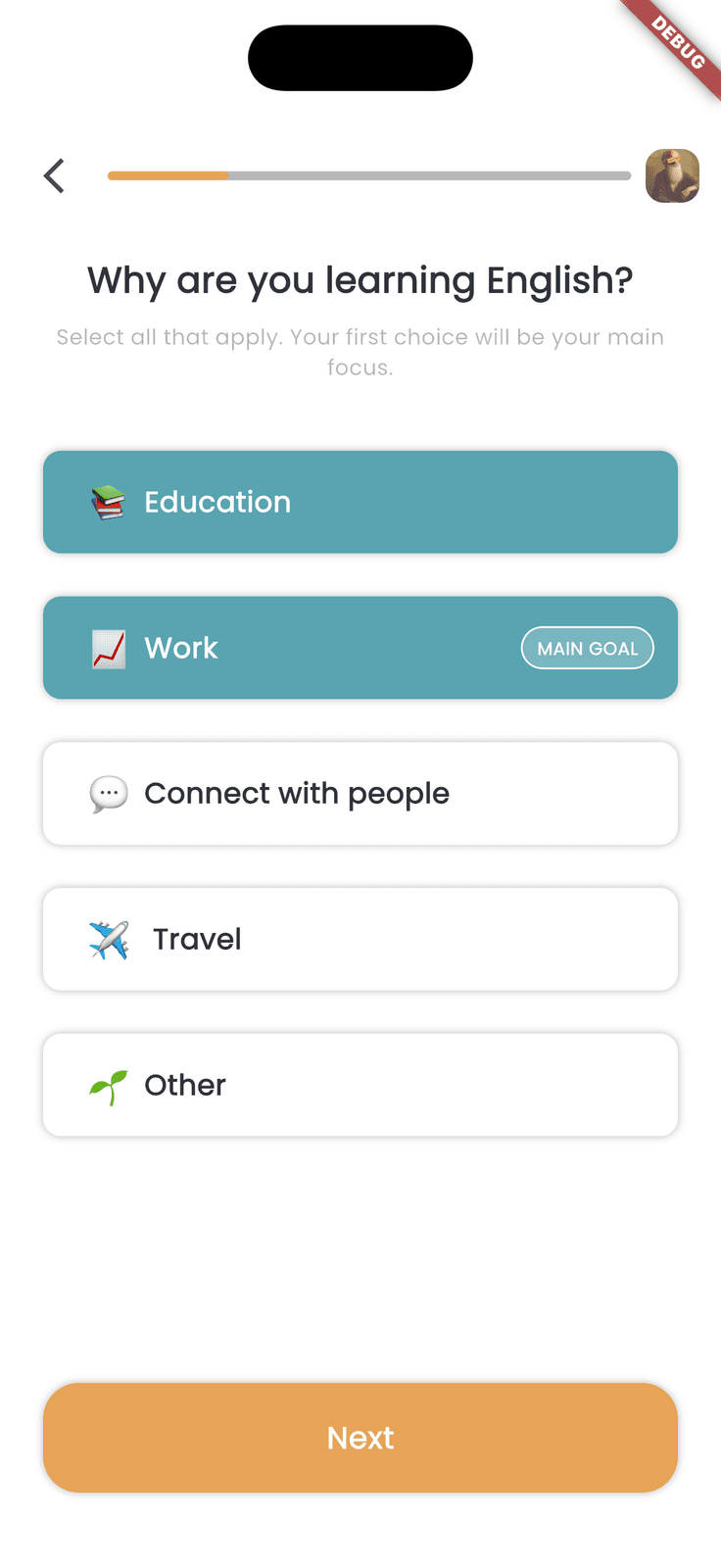
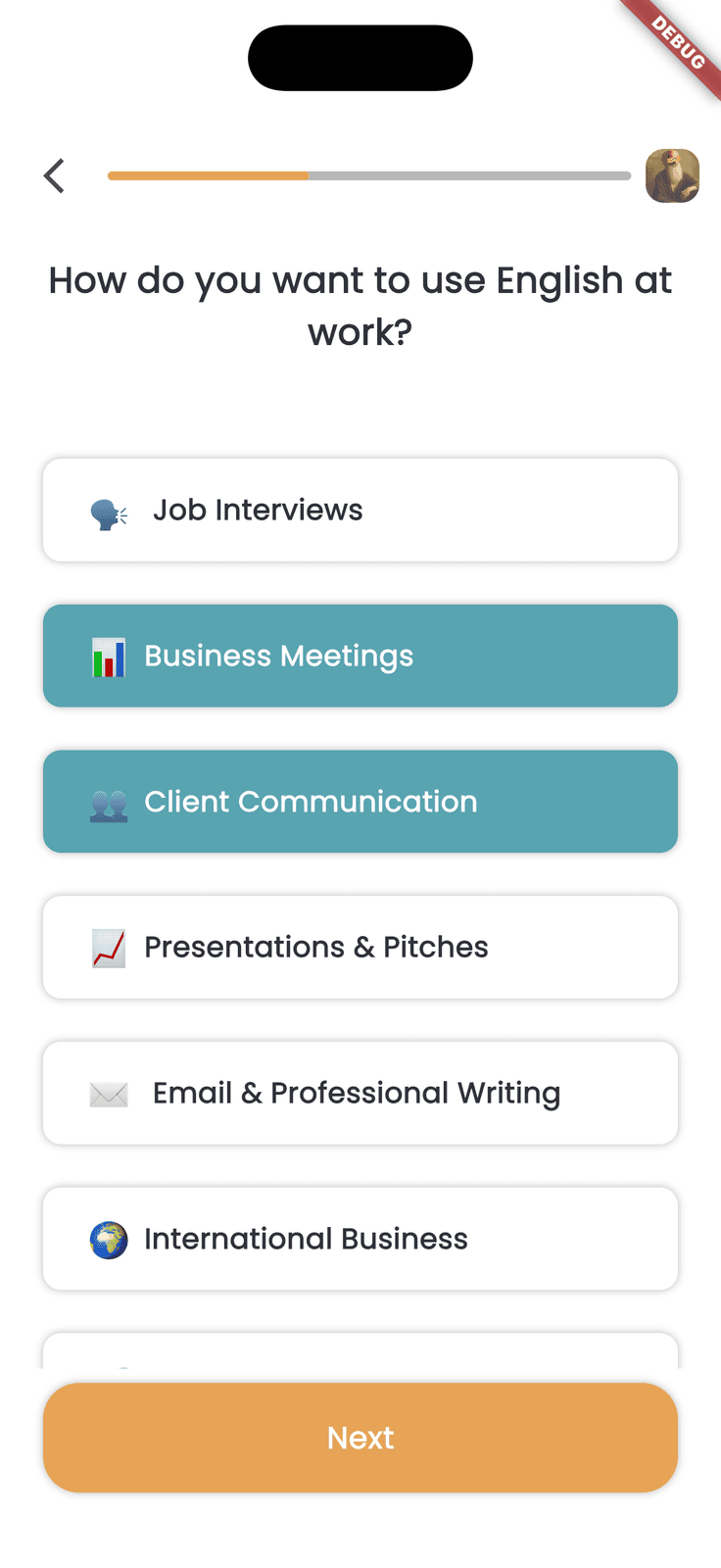
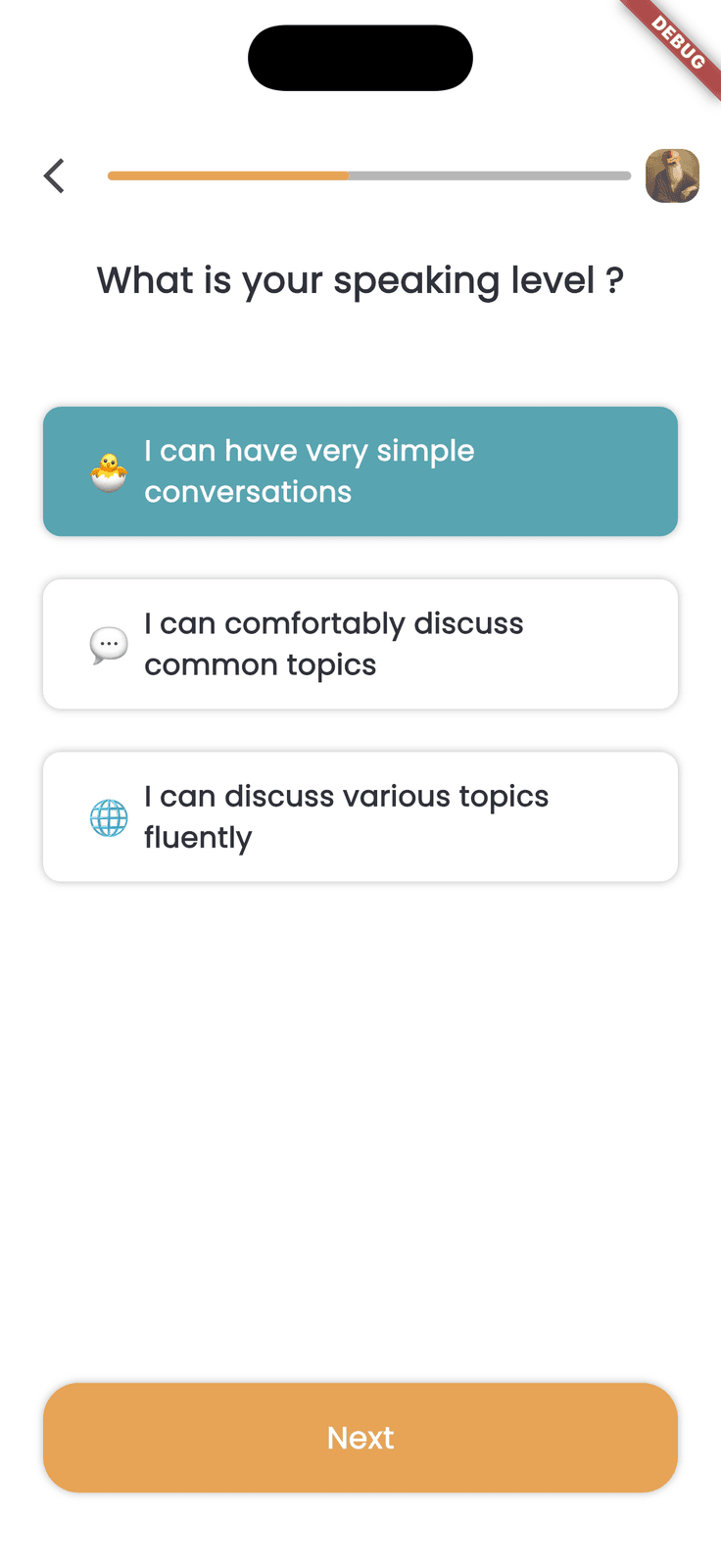
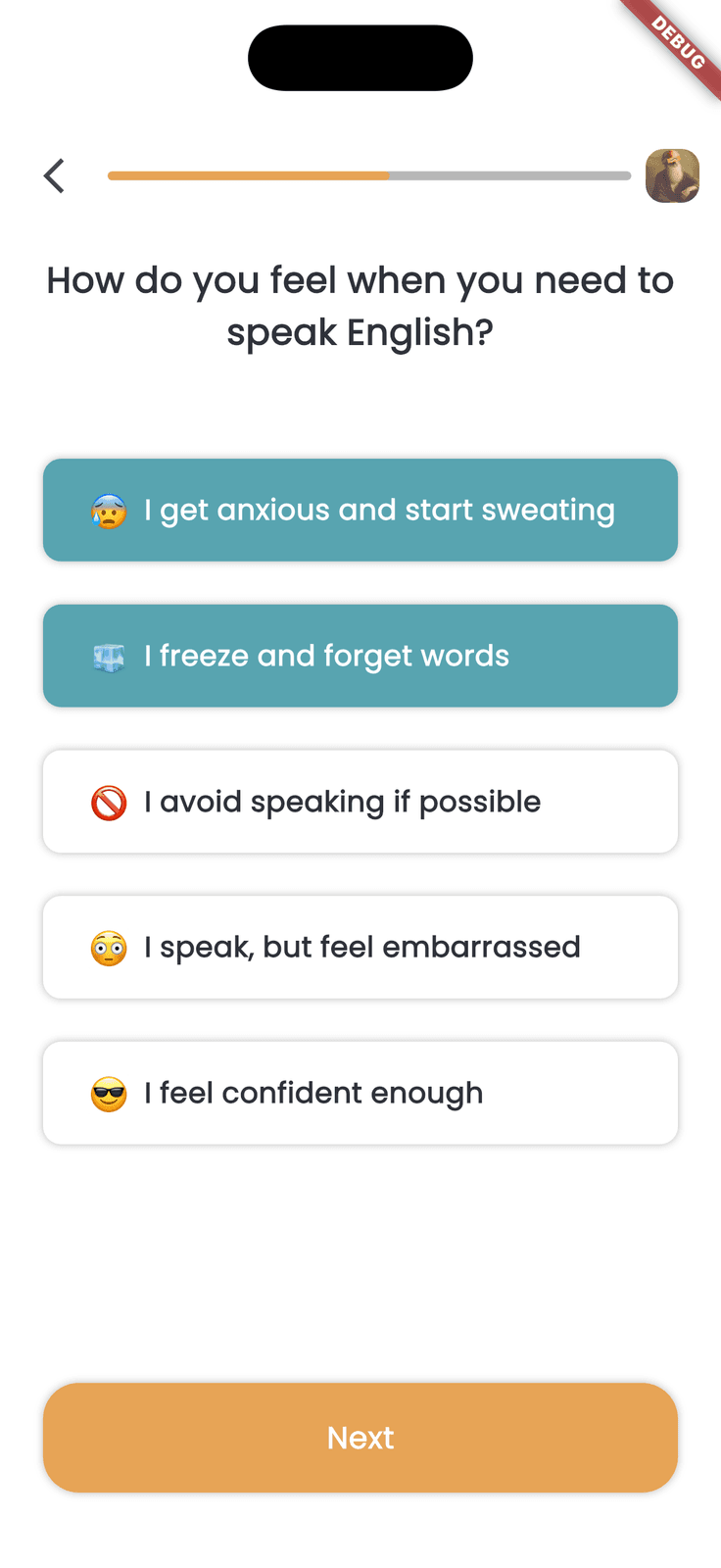
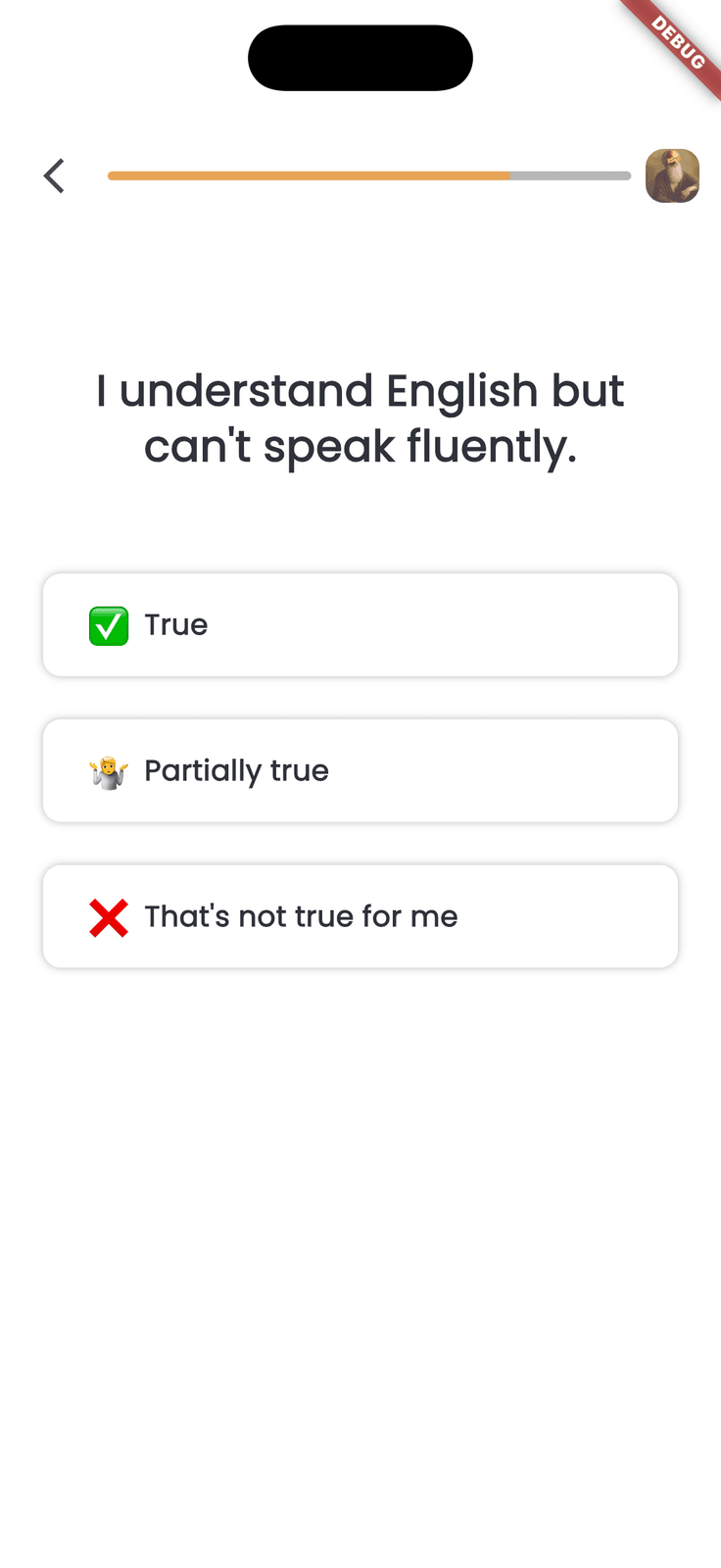
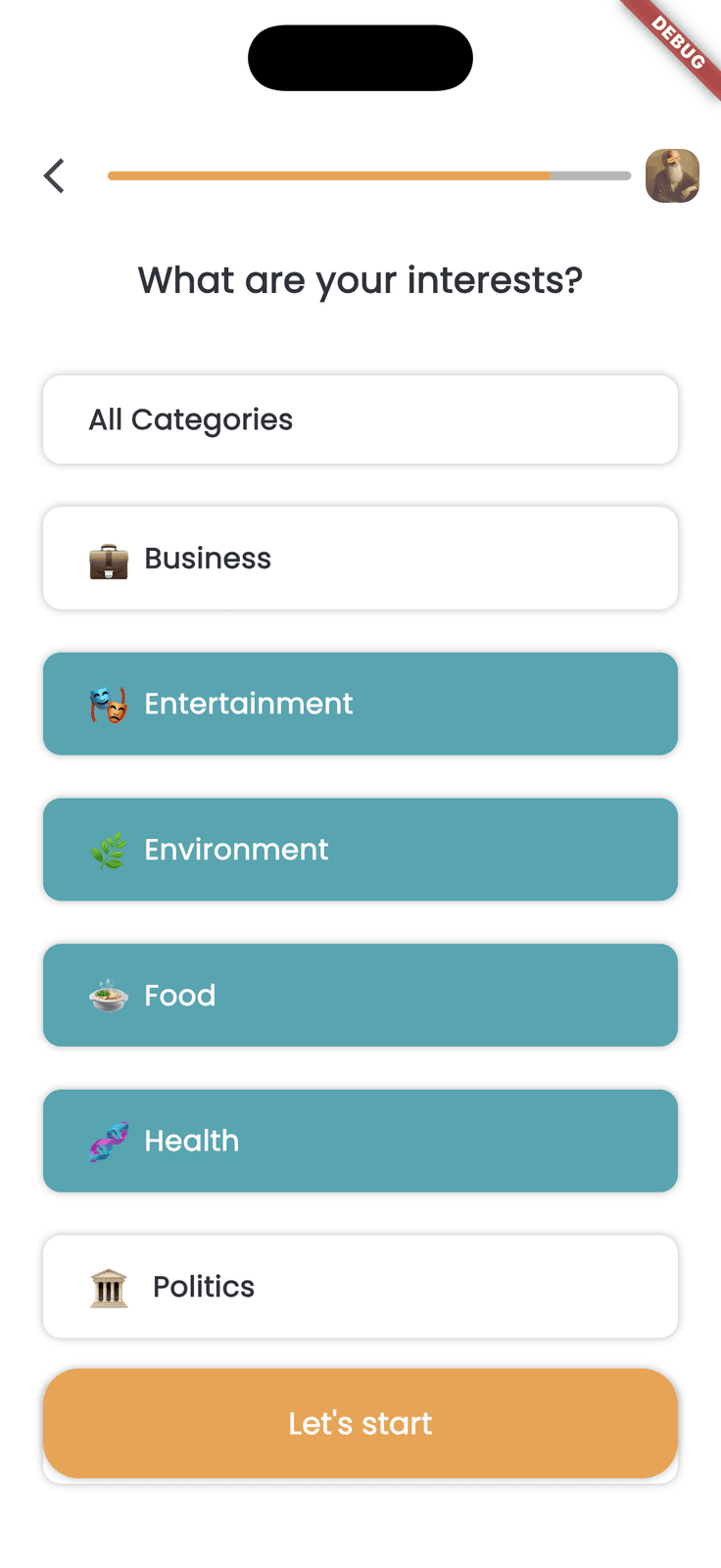
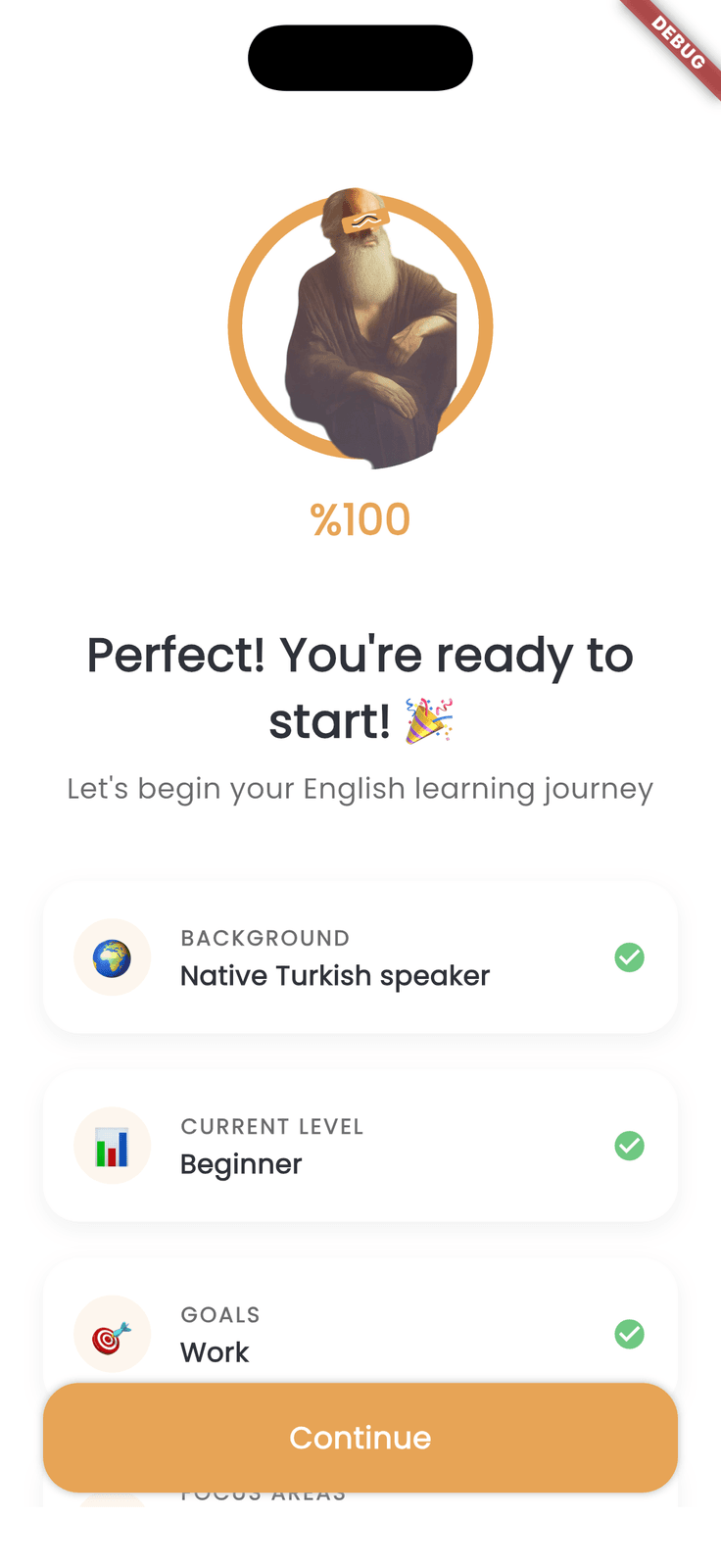
One thing I learned building consumer apps is that onboarding is the most important part of the whole experience. So I went deliberately long, almost 30 screens, to capture each user's segment, behavior and real goals from the very first session. Instead of just listing features, the flow lets people feel the value before they commit, and every step doubles as a signal: the analytics from onboarding became the roadmap for where the product goes next.
Practice on what's happening today
Motivation dies when there's nothing to talk about. Real, current news, browsable by category and rewritten for the user's level, gives a fresh reason to open the app every day.
Real-time conversation
Tap once and start talking. The assistant listens, responds naturally and keeps the exchange going, so practice feels like a real chat rather than a test.
Smart hints when you get stuck
The moment a user goes quiet, contextual hints suggest what they could say next, removing the dead ends that usually make people quit a conversation.
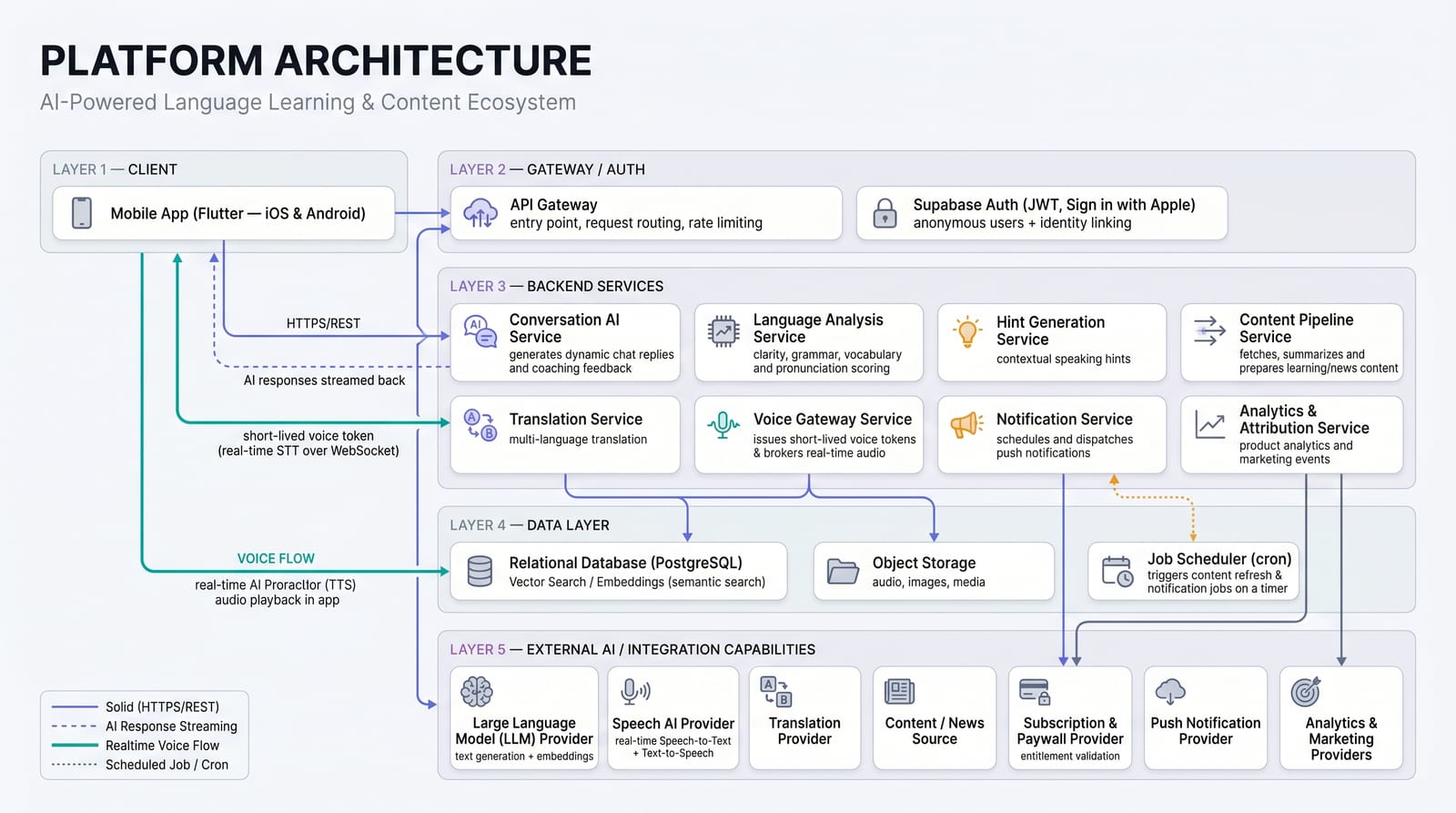
As the solo founder, I owned the entire product lifecycle on my own: the core concept, product strategy, user research, UX and interaction design, prototyping, system design, development. Every decision, from the speaking-first vision down to each screen, was mine, and I shipped it to both the App Store.
The biggest risk isn't technical. It's building something people don't actually need.
Wearing every hat is only sustainable with a design system that keeps you fast and coherent.
Shipping a real-time voice AI product pushed me into clean architecture and professional engineering practices for real. Keeping conversations fast, reliable and cost-efficient while building for consumer scale taught me lessons about latency, cost and reliability that no tutorial ever could.
Most of all, taking this from a raw idea all the way to production taught me every step of the journey hands on, not in theory. Validation, design, engineering, launch and scaling all came from doing the work, and that is the kind of experience you only earn by shipping.
Let's build
something
together.